
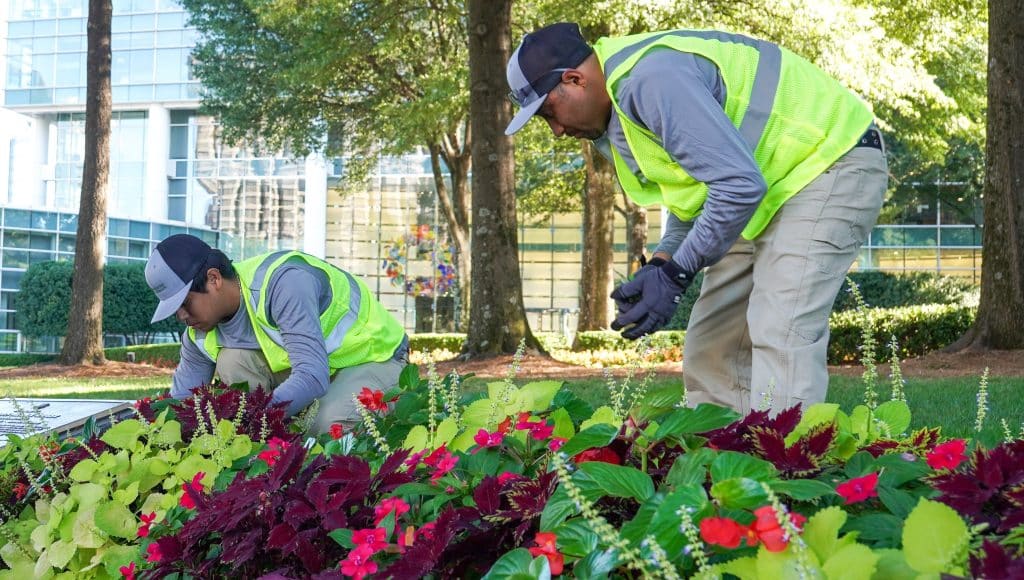
The Atlanta Spring Planning Window
Spring in Atlanta is a narrow but powerful opportunity for landscape transformation.
For homeowners looking for practical seasonal guidance, our complete guide to spring landscaping tips in Atlanta covers maintenance strategies that complement long-term design planning.
With Georgia falling in USDA Zones 7b–8a, plants break dormancy early, and outdoor living becomes comfortable long before summer heat and humidity peak. Property owners who plan early are able to enjoy their outdoor spaces fully before July arrives—and avoid rushed decisions or limited contractor availability.
Strategic spring planning allows Atlanta property owners to blend high-value hardscapes with vibrant softscapes, creating outdoor spaces that look polished, function well, and hold long-term value.
Hardscape Foundations: Structuring the Outdoor Space
Hardscape elements form the backbone of any successful landscape design. In Atlanta, these features must handle heavy rain, shifting soil, and seasonal temperature swings while still delivering visual appeal.
Well-planned hardscapes define movement, gathering areas, and usable space—turning a yard into an outdoor living environment.
The Durability and Elegance of Bluestone Patios
Bluestone is widely considered one of the best materials for Atlanta patio construction due to its durability, appearance, and performance in Georgia’s climate.
For Bluestone patio installation, property owners benefit from:
- Excellent resistance to cracking and shifting
- Natural slip resistance during spring rain
- A timeless aesthetic that complements brick and stone
- Long-term value with minimal maintenance
Bluestone’s natural color variation works equally well in traditional Southern landscapes and modern outdoor designs, making it a cornerstone of high-end Atlanta landscape design.
Outdoor Kitchens as Full Culinary Destinations
Outdoor kitchens in Georgia have evolved beyond simple grilling stations into fully functional entertainment hubs.
Today’s most in-demand outdoor kitchens in GA often include:
- Built-in grills and smokers
- Pizza ovens and prep stations
- Beverage centers with refrigeration
- Stone countertops and bar seating
- Integrated lighting and electrical
Spring installation ensures the space is ready for entertaining well before peak summer temperatures and scheduling congestion.
Retaining Walls for Function, Flow, and Visual Interest
Atlanta’s naturally sloped terrain makes retaining walls both practical and aesthetic.
When designed correctly, retaining walls:
- Prevent erosion and drainage issues
- Create level, usable outdoor areas
- Add architectural structure to the landscape
- Double as seating or garden borders
Rather than viewing retaining walls as purely functional, modern landscape design treats them as sculptural elements that enhance the overall composition.
Softscape Design: Bringing the Landscape to Life
If hardscape creates structure, softscape adds movement, color, and seasonal character.
Understanding softscape vs hardscape allows commercial property owners and residential homeowners to balance permanence with change—pairing stone and structure with plantings that evolve throughout the year.
What Are the Best Plants for Atlanta Landscaping in Spring?
The best plants for Atlanta spring landscapes are those that thrive in Georgia’s soil and climate while offering strong seasonal interest.
Atlanta-friendly spring plant choices include:
- Azaleas for bold, reliable color
- Dogwoods for flowering canopy structure
- Native pollinator plants that support bees and butterflies
Native and regionally adapted plants typically require less water, establish faster, and perform better during Atlanta’s hot summers.
Layering for Year-Round Visual Structure
Great landscapes don’t peak for just one season.
A layered planting strategy typically includes:
- Evergreen shrubs for structure and winter interest
- Flowering perennials for spring and summer color
- Ornamental grasses for texture and movement
- Ground covers for erosion control and bed cohesion
This approach ensures the landscape remains visually appealing long after spring blooms fade.
Spring Landscaping Ideas That Boost Curb Appeal
Spring is one of the highest-impact seasons for improving curb appeal in Atlanta.
High-performing upgrades include:
- Bluestone walkways and entry paths
- Freshly edged planting beds with mulch
- Accent trees near entryways
- Low-voltage landscape lighting
- Defined borders between turf and beds
Even modest enhancements can significantly improve a property’s appearance when executed with professional design intent.
The Spring Landscape Planning Checklist
Early planning is what separates smooth projects from costly delays.
Spring Landscape Planning Essentials:
- Site drainage assessment
- Hardscape material selection
- Irrigation system audit
- Soil testing and amendment planning
- Layout and grading review
- Utility and property line verification
- Phased installation scheduling
Spring Landscaping FAQ
When should I start spring landscaping projects in Atlanta?
The ideal time to start planning spring landscaping in Atlanta is late winter to early spring, with most installations beginning between March and April. Early planning ensures better plant establishment and contractor availability.
Is spring a good time to install hardscapes in Georgia?
Yes. Spring is an excellent time for hardscape installation because soil conditions are workable, temperatures are moderate, and projects are completed before summer heat slows construction timelines.
How long does a landscape installation typically take?
Landscape installation timelines vary based on size and complexity, but most small residential projects like mulch, plantings, or minor sod work take 1–3 days, while medium residential renovations with beds, shrubs, and sod typically take 3–7 days. Larger residential projects or those involving hardscapes, irrigation, or full-property redesigns can take 1–3 weeks. Commercial installations range from about 1–2 weeks for small office or retail properties to 4–8+ weeks for large apartment, industrial, or campus-style projects, with weather, material availability, and site access being the biggest factors that affect timing.
Do native plants really reduce maintenance?
Yes. Native plants typically require less irrigation, fertilizer, and pest control once established, making them a smart long-term investment for Atlanta landscapes.
Conclusion: Designing Ahead for a Better Outdoor Season
Spring is Atlanta’s most valuable season for landscape enhancement—but only if you plan ahead.
By combining durable hardscape elements like bluestone patios and retaining walls with thoughtfully layered softscapes, property owners can create outdoor environments that are functional, beautiful, and built to last.
Transform your backyard into a retreat with Peachtree Landscape.
Schedule a consultation today and start designing a landscape you’ll enjoy all season long! Contact us at (404) 431-1950 or complete the contact form below to request your free proposal!