
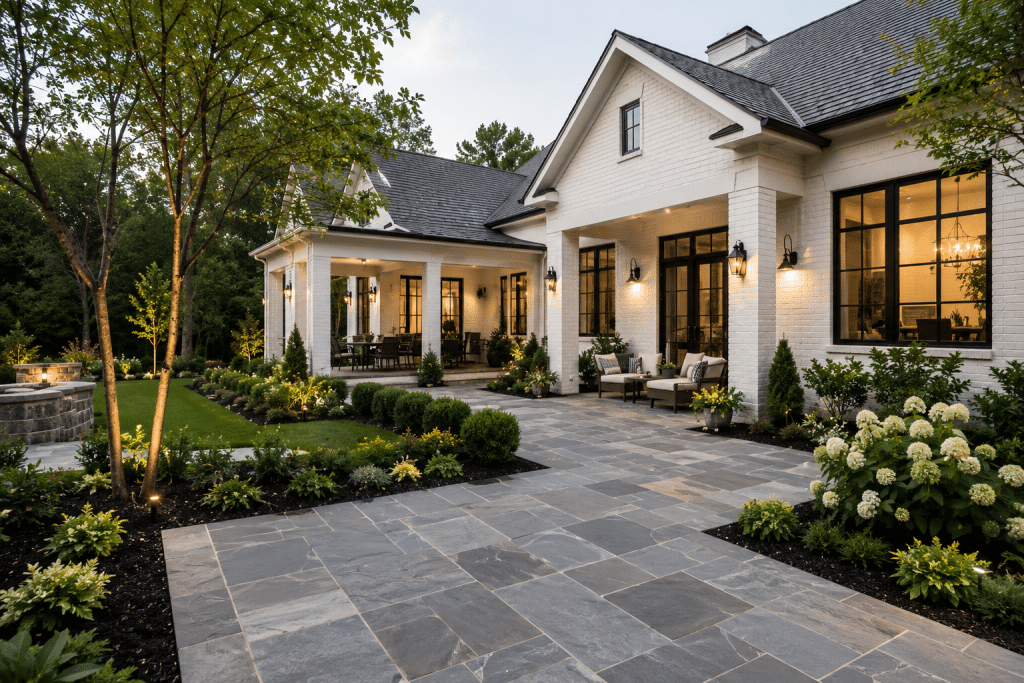
Bluestone is widely considered one of the best patio materials for Georgia homes because of its durability, natural slip resistance, and timeless appearance. However, darker bluestone surfaces can absorb heat during Georgia summers. For shaded patios and covered outdoor living spaces, bluestone is often an ideal choice, while lighter materials like travertine may perform better in full-sun pool areas.
Why Georgia Homeowners Continue Choosing Bluestone
Few patio materials create the same visual impact as natural bluestone.
Across Metro Atlanta, Alpharetta, Milton, Roswell, Marietta, and North Georgia communities, bluestone patios have become a signature feature in luxury outdoor living design. Homeowners are increasingly drawn to the material’s natural elegance, durability, and ability to complement Georgia’s lush landscape environments.
But selecting the right patio material in Georgia requires more than simply choosing what looks best in a showroom.
A patio must withstand:
- Intense summer heat
- Heavy rainfall
- High humidity
- Freeze-thaw winter cycles
- Expansive red clay soil movement
- Drainage challenges
That is why installation quality and drainage engineering matter just as much as the stone itself.
At Peachtree Landscape, hardscape projects are designed specifically for Georgia’s environmental conditions. Proper base preparation, grading, drainage planning, and material selection are critical to ensuring patios perform well for decades rather than just a few seasons.
The Pros: Why Bluestone Performs So Well in Georgia
Timeless Aesthetic Appeal
Bluestone remains one of the most sought-after hardscape materials because of its distinctive blue-gray color palette and natural texture.
In Georgia landscapes, bluestone pairs exceptionally well with:
- Green lawns and native plantings
- White brick exteriors
- Modern farmhouse architecture
- Traditional Southern homes
- Contemporary outdoor living spaces
Its subtle color variation creates a high-end appearance that feels natural rather than manufactured.
For homeowners investing in outdoor kitchens, fire pits, covered patios, or luxury backyard renovations, bluestone often becomes the centerpiece of the design.
Slip Resistance in Georgia’s Humid Climate
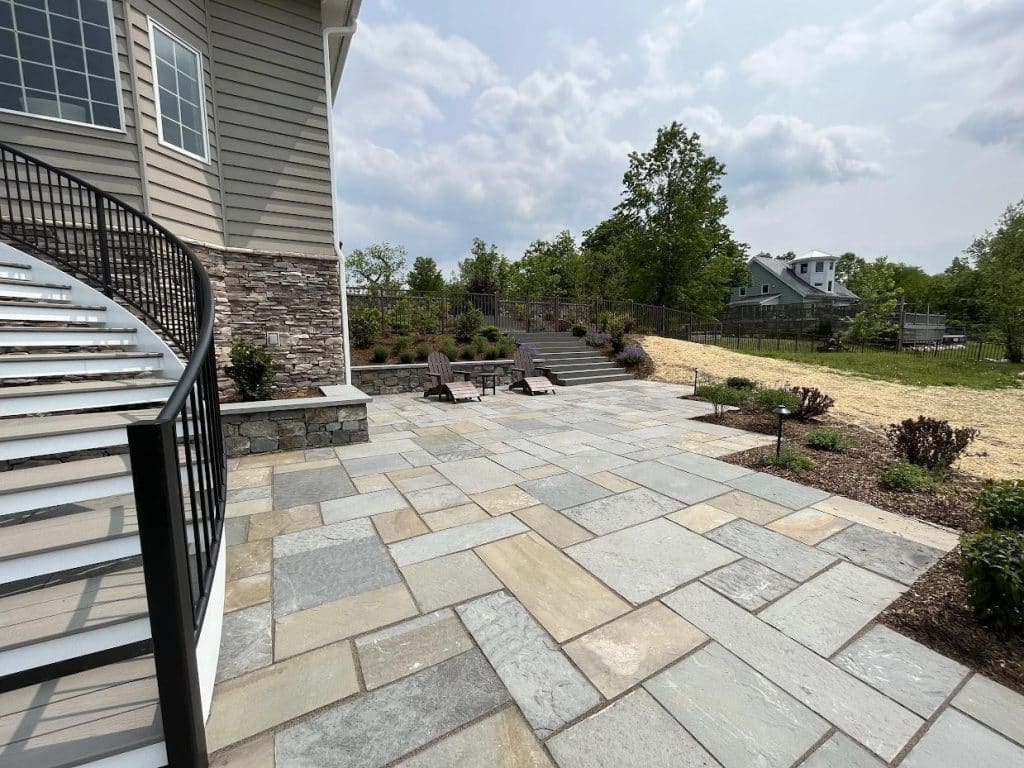
Georgia homeowners deal with constant moisture challenges.
Morning dew, humidity, rainstorms, and shaded environments can quickly make certain patio materials slippery and unsafe. Natural cleft bluestone offers excellent traction because of its textured surface.
This makes it especially valuable for:
- Covered patios
- Screened porches
- Garden walkways
- Outdoor entertainment spaces
- Areas near water features
In humid regions like Atlanta and North Georgia, slip resistance is not simply a convenience. It is a long-term safety consideration.
Exceptional Longevity
When installed correctly, a bluestone patio can last 50 years or more.
Unlike lower-grade concrete systems or untreated wood decking, natural stone resists:
- Cracking
- Rot
- UV fading
- Insect damage
- Moisture deterioration
The key phrase, however, is “installed correctly.”
Georgia’s red clay soil expands and contracts significantly throughout the year. Without proper drainage and a professionally engineered base, even premium stone patios can shift, settle, or crack over time.
This is why drainage planning is one of the most important aspects of any hardscape installation. View more about drainage and erosion solutions here.
The Cons: Georgia’s Climate Creates Unique Challenges
Bluestone Can Get Hot in Direct Sunlight
One of the biggest drawbacks of bluestone in Georgia is heat retention.
Because bluestone is typically darker in color, it absorbs and holds heat during the summer months. In full sun, surfaces can become uncomfortable for bare feet during peak afternoon temperatures.
For this reason, bluestone performs best in:
- Covered patios
- Pergola-covered outdoor spaces
- Screened-in porches
- Partially shaded backyard areas
For pool decks or fully exposed patios, lighter-colored materials like travertine or cool-touch pavers may provide better comfort.
Porosity and Moisture Management
Bluestone is naturally porous.
In Georgia’s humid environment, unsealed stone can absorb moisture, which may eventually lead to:
- Algae growth
- Moss buildup
- Water staining
- Red clay discoloration
Routine sealing and maintenance help protect the stone and preserve its appearance long-term.
This is especially important in shaded areas where moisture tends to linger longer after rainstorms.
Choosing Between Thermal and Natural Cleft Bluestone
Not all bluestone surfaces perform the same way.
Homeowners typically choose between two primary finishes:
Natural Cleft Bluestone
- Textured surface
- More slip resistant
- Rustic appearance
- Better traction in wet conditions
Thermal Bluestone
- Smooth sawn finish
- More contemporary appearance
- Easier to clean
- Can become hotter under direct sunlight
For many Georgia homes, natural cleft bluestone is often the preferred option because it handles humidity and moisture more effectively while remaining comfortable underfoot.
Head-to-Head Comparison: Bluestone vs. Other Popular Patio Materials
| Material | Heat Retention | Durability | Maintenance | Best For |
|---|---|---|---|---|
| Bluestone | High | Excellent | Moderate | Elegant shaded patios |
| Flagstone | Medium | Good | Moderate | Rustic pathways and natural landscapes |
| Travertine | Low (Cool Surface) | High | Moderate | Pool decks and full-sun areas |
| Porcelain Pavers | Medium | Very High | Low | Modern low-maintenance outdoor spaces |
Bluestone vs. Flagstone
Many homeowners confuse bluestone and flagstone, but they are not identical.
Flagstone refers to a broader category of natural stone that includes irregularly shaped pieces and multiple color variations. It creates a more rustic, organic look.
Bluestone typically delivers a cleaner, more refined appearance that aligns with modern luxury outdoor living trends throughout Metro Atlanta.
Why Travertine Is Popular for Georgia Pool Decks
Travertine has become increasingly popular in Georgia because it stays cooler under direct sunlight.
For pool patios in communities like Alpharetta and Milton, travertine often outperforms darker natural stones during summer heat waves.
However, travertine generally offers a softer, lighter aesthetic compared to the dramatic appearance of bluestone.
Porcelain Pavers: The 2026 Low-Maintenance Trend
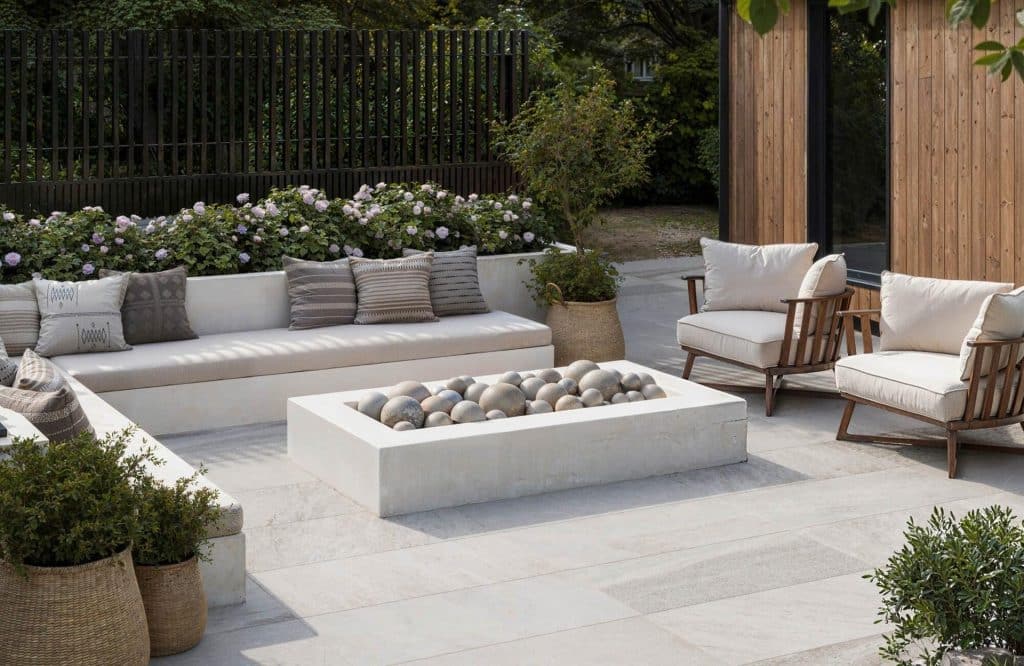
Porcelain pavers are emerging as one of the fastest-growing hardscape trends in Georgia.
Homeowners appreciate their:
- Low maintenance requirements
- Stain resistance
- Minimal sealing needs
- Contemporary appearance
- High durability
Porcelain also resists moss and algae growth better than many natural stone materials, making it attractive for busy homeowners seeking low-maintenance outdoor living.
The Peachtree Installation Standard: Why Drainage Matters More Than the Stone
At Peachtree Landscape, one principle guides every hardscape installation:
A patio is only as good as the drainage system underneath it.
Drainage Is Critical in Georgia
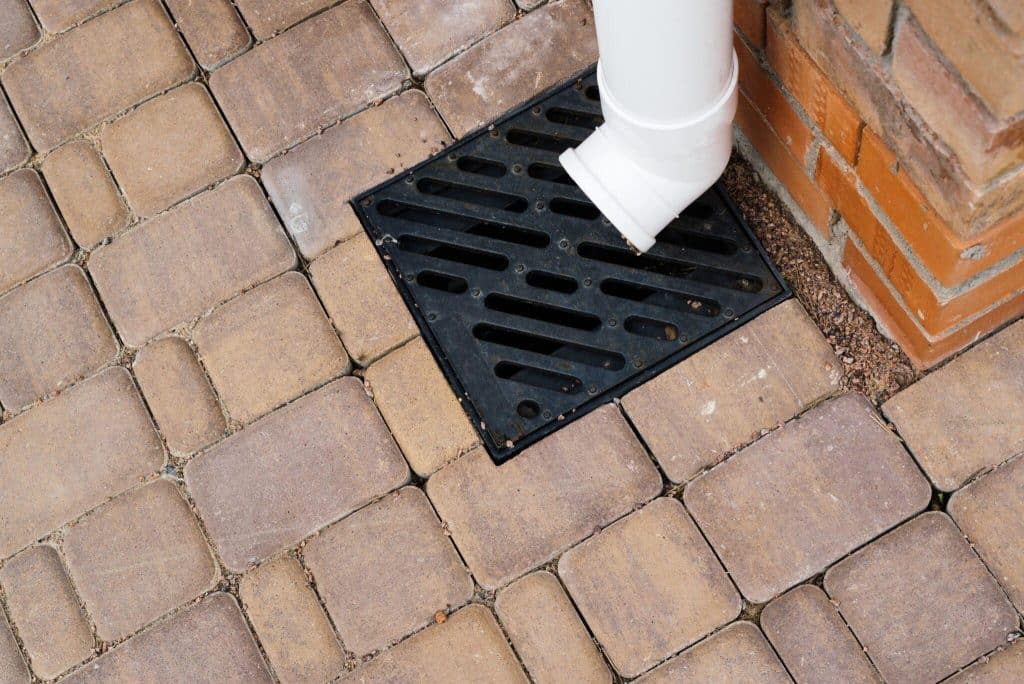
Georgia’s heavy rainfall and clay-rich soil create significant hydrostatic pressure beneath patios and retaining walls.
Without proper grading and drainage engineering, homeowners may experience:
- Shifting stone
- Water pooling
- Surface erosion
- Cracked joints
- Premature patio failure
This is why professional drainage design is essential for long-term hardscape performance.
The Importance of Proper Base Preparation
A premium natural stone patio requires a stable foundation.
Peachtree Landscape designs hardscape systems specifically to accommodate Georgia’s expansive soil movement and seasonal moisture changes.
This includes:
- Excavation depth planning
- Compacted aggregate bases
- Drainage integration
- Proper slope calculation
- Edge restraint systems
The visible stone is only one part of a successful patio system. The hidden structural work underneath determines how well the installation performs over time.
A Simple Peachtree-Approved Bluestone Maintenance Plan
To keep a bluestone patio looking its best in Georgia:
- Sweep debris regularly
- Rinse pollen buildup seasonally
- Clean organic growth early
- Reseal every few years as recommended
- Address drainage issues immediately
Preventative maintenance is far easier and less expensive than correcting moisture-related damage later.
Is Bluestone the “Best” Patio Material for Georgia Homes?
For many homeowners, the answer is yes.
Bluestone remains one of the most elegant and durable patio materials available, particularly for shaded patios, covered outdoor living spaces, and high-end backyard environments.
However, the “best” patio material ultimately depends on:
- Sun exposure
- Intended use
- Maintenance expectations
- Drainage conditions
- Overall design goals
A patio should not simply look beautiful on installation day. It should continue performing well through Georgia’s humidity, storms, heat, and seasonal changes for decades to come.
Ready to Explore Patio Options for Your Home?
Peachtree Landscape designs and installs custom patios and outdoor living spaces throughout Metro Atlanta and North Georgia. Whether you are looking for a simple patio upgrade or a complete outdoor transformation, our team can help bring your vision to life.
You can also:
- Request a Custom Patio Quote
- Explore Outdoor Living Services
- Learn About Drainage & Erosion Solutions
FAQ Section
Does bluestone get too hot for bare feet in Georgia?
Yes, bluestone can become hot in direct sunlight because of its darker color. For uncovered patios and pool decks in full sun, lighter materials like travertine may stay cooler underfoot during Georgia summers.
How much does a bluestone patio cost in Atlanta?
Bluestone is considered a premium natural stone material, so costs are generally higher than standard concrete pavers. Pricing depends on the size of the patio, site conditions, drainage requirements, stone thickness, and installation complexity.
Do I need to seal my bluestone patio in Georgia?
Yes. Sealing helps protect bluestone from moisture absorption, algae growth, red clay staining, and weather-related discoloration. Georgia’s humidity makes routine sealing especially important for long-term durability and appearance.