
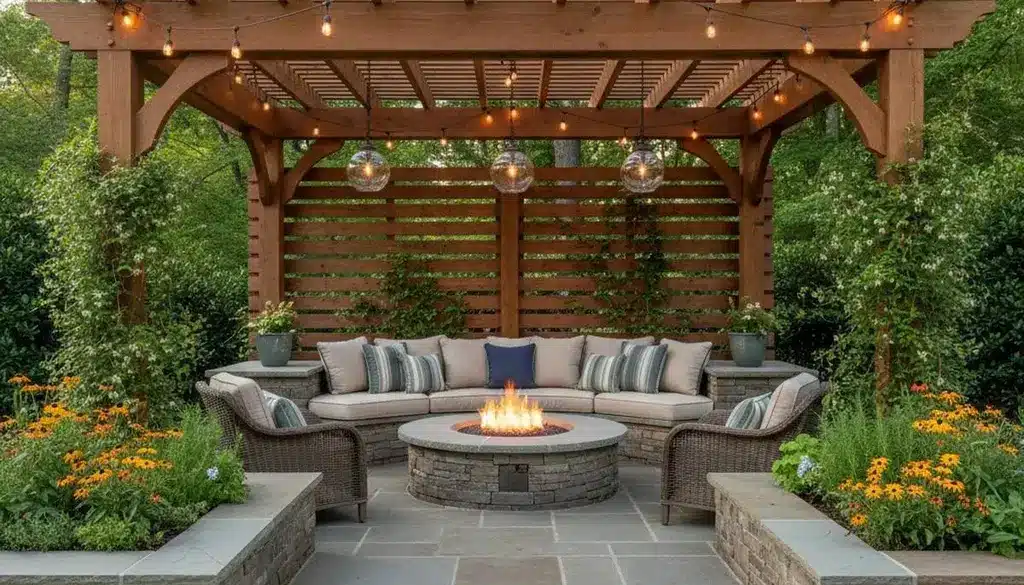
In 2026, low-stress outdoor living is defined by “Resilient Minimalism.” Key trends include smart automation, native Georgia plantings that require less water, and durable hardscaping like porcelain pavers. Whether residential or commercial, the focus is on reducing maintenance while maximizing comfort, sustainability, and mental well-being through thoughtful outdoor design.
The Evolution of “Low-Stress” Outdoor Spaces in Georgia
For many Georgia homeowners, HOA communities, and commercial property managers, outdoor spaces have become another source of stress instead of relaxation. Rising maintenance costs, unpredictable weather patterns, water management concerns, and busy schedules are pushing property owners to rethink traditional landscaping.
In 2026, the trend is moving away from overly manicured, high-maintenance landscapes and toward resilient outdoor environments that are easier to manage year-round. Across Atlanta, Alpharetta, Marietta, Milton, Roswell, and surrounding communities, homeowners and businesses are prioritizing outdoor spaces that feel natural, functional, and calming without requiring constant upkeep.
This shift is especially important in Georgia, where humidity, clay-heavy soil, intense summer heat, and heavy rainfall can quickly turn poorly designed landscapes into expensive maintenance projects.
At Peachtree Landscape, years of experience designing and maintaining landscapes throughout Metro Atlanta have shown that successful outdoor living spaces must be designed specifically for Georgia’s climate and environmental conditions. The best landscapes in 2026 are not only beautiful. They are intelligent, adaptable, and built for long-term performance.
Residential Trends: Creating the Ultimate Private Sanctuary

The “Un-Lawn” Movement and Native Georgia Landscaping
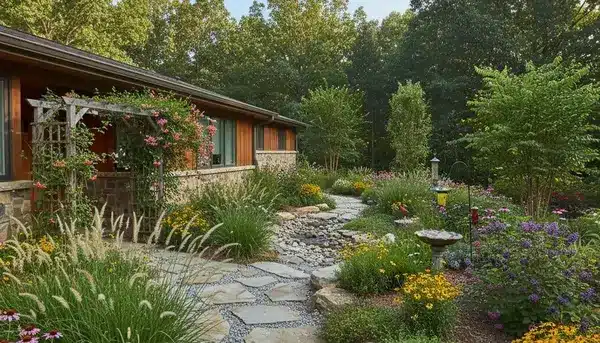
One of the biggest landscaping trends for 2026 is the reduction of high-maintenance turf grass in favor of native plantings and naturalized spaces.
Homeowners throughout Atlanta and North Fulton County are replacing portions of traditional lawns with drought-resistant Georgia-native plants that require less mowing, watering, fertilizing, and pest control. These landscapes also provide critical support for pollinators and local ecosystems.
Popular low-maintenance native plants for Georgia include:
- Muhly Grass
- Black-Eyed Susans
- Coneflowers
- Oakleaf Hydrangeas
- River Oats
- Yaupon Holly
These plants are naturally adapted to Georgia’s Zone 8a and 8b climate conditions, making them more resilient during heat waves and seasonal droughts.
Native meadowing also creates a softer, more organic aesthetic that feels relaxing instead of rigidly formal. For homeowners seeking a stress-free backyard design, reducing turf areas often leads to significantly lower monthly maintenance costs.
Smart Hardscaping and “Invisible” Outdoor Technology
Technology is becoming seamlessly integrated into modern outdoor living spaces.
In 2026, homeowners are increasingly investing in hardscaping materials and automation systems that simplify property maintenance while improving comfort and functionality.
Large-format permeable pavers are becoming especially popular in Georgia because they help address one of the region’s biggest landscape issues: drainage. Heavy rains and compacted clay soil can quickly create runoff problems, standing water, and erosion around patios and walkways.
Permeable hardscaping systems allow water to infiltrate naturally into the ground, reducing runoff while improving long-term durability.
Other popular smart outdoor features include:
- App-controlled landscape lighting
- Automated irrigation systems
- Weather-responsive watering schedules
- Automated mosquito misting systems
- Outdoor audio systems with hidden speakers
- Smart drainage monitoring systems
These technologies allow homeowners to enjoy their outdoor spaces without constantly managing them.
The Rise of the “Healing Garden”
Outdoor living design is increasingly focused on mental wellness and stress reduction.
Many homeowners in communities like Alpharetta, Milton, and Marietta are requesting “healing gardens” that create a calming retreat from traffic noise, busy schedules, and screen-heavy lifestyles.
These spaces often include:
- Low-maintenance bubbling boulders
- Natural stone seating areas
- Shade gardens
- Fragrant native plantings
- Layered privacy landscaping
- Soft outdoor lighting
- Quiet meditation areas
Water features remain popular, but 2026 designs are prioritizing smaller, lower-maintenance elements that provide soothing sound without requiring extensive upkeep.
The goal is to create a backyard environment that feels restorative rather than demanding.
Commercial Trends: Functional Outdoor Amenities for Modern Businesses
 “Work-from-Outside” Outdoor Spaces
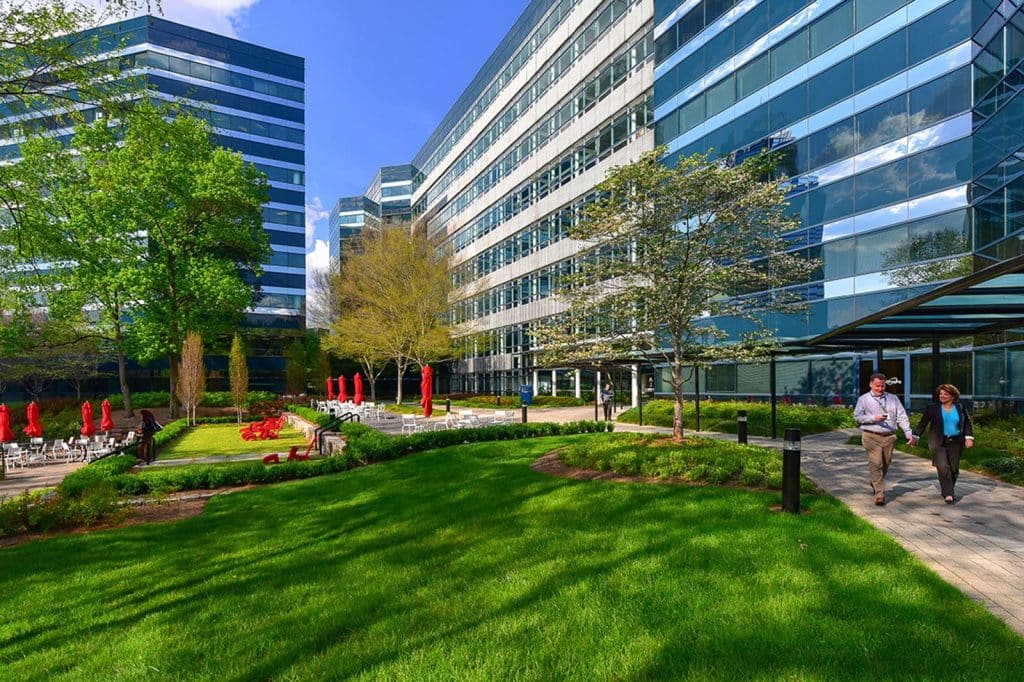 “Work-from-Outside” Outdoor Spaces
Commercial landscapes are evolving rapidly as businesses continue adapting to hybrid work environments.
Office parks, apartment communities, healthcare campuses, and mixed-use developments throughout Atlanta are investing in outdoor spaces that function as productive extensions of indoor environments.
In 2026, commercial landscape design trends include:
- Shaded outdoor workstations
- Weather-resistant seating
- Outdoor conference areas
- Integrated charging stations
- High-speed Wi-Fi support
- Flexible gathering spaces
- Covered hardscape lounges
These amenities improve tenant satisfaction while helping commercial properties remain competitive in the modern leasing market.
For multifamily and HOA properties, outdoor amenities are increasingly viewed as essential resident retention tools rather than optional upgrades.
Low-Impact Development (LID) and Sustainable Stormwater Management
Sustainability is becoming a major priority for commercial properties throughout Georgia.
Low-Impact Development (LID) techniques help businesses manage runoff, reduce utility costs, and improve environmental performance without sacrificing aesthetics.
Common LID landscape strategies include:
- Rain gardens
- Bioswales
- Native buffer zones
- Permeable pavements
- Smart irrigation systems
- Water-efficient plantings
These systems are particularly valuable in Metro Atlanta, where stormwater management regulations continue to evolve and excessive runoff can create both environmental and liability concerns.
Sustainable commercial landscapes also help properties demonstrate environmental responsibility to tenants, employees, and customers.
Durability as the New Luxury
Commercial property owners are increasingly prioritizing durability and lifecycle value over short-term savings.
High-traffic outdoor spaces require materials that maintain their appearance with minimal maintenance.
In 2026, some of the most requested commercial hardscape materials include:
- High-grade composite decking
- Porcelain pavers
- Natural stone plazas
- Architectural concrete systems
- Aluminum pergolas
- Weather-resistant furnishings
Unlike traditional wood decking or lower-quality materials, these systems resist fading, staining, moisture damage, and mold growth in Georgia’s humid climate.
For commercial properties, reduced maintenance directly translates into lower long-term operating costs.
2026’s Top Low-Maintenance Landscape Materials
Hardscape: Large-Format Porcelain Pavers
Porcelain pavers are quickly becoming one of the most sought-after hardscape materials in Georgia.
They offer several major advantages:
- Stain resistance
- Slip resistance
- Minimal fading
- Moss resistance
- Easy cleaning
- Modern aesthetic appeal
Porcelain also performs extremely well in humid environments, making it ideal for outdoor living spaces in Atlanta and surrounding communities.
Softscape: Climate-Ready Plantings
The best low-maintenance landscapes in 2026 are built around plants specifically selected for Georgia’s climate realities.
Climate-ready plantings focus on:
- Heat tolerance
- Drought resistance
- Humidity resilience
- Reduced disease susceptibility
- Lower fertilizer requirements
This approach reduces both maintenance demands and replacement costs over time.
Irrigation: AI-Driven Smart Water Management
Modern irrigation technology is transforming landscape maintenance.
AI-driven irrigation systems can now automatically adjust watering schedules based on:
- Weather forecasts
- Soil moisture levels
- Seasonal evaporation rates
- Rainfall data
- Plant-specific water needs
These systems help reduce water waste while protecting landscapes during Georgia’s extreme summer conditions.
For commercial properties, smart irrigation can significantly lower utility expenses and maintenance labor.
Why Drainage Is the Foundation of Every Low-Maintenance Landscape
No outdoor living space in Georgia will remain “low-maintenance” without proper drainage planning.
Heavy rain, clay soil, and poor water movement are some of the biggest reasons patios settle, retaining walls shift, turf fails, and planting beds struggle throughout Metro Atlanta. Even premium materials can deteriorate prematurely if excess water is not properly managed beneath the surface.
At Peachtree Landscape, drainage and erosion control solutions are integrated into outdoor living projects from the beginning, not treated as an afterthought. Proper grading, runoff management, and subsurface drainage systems help protect both residential and commercial landscapes long after installation is complete.
The Peachtree Perspective: Why Georgia-Specific Expertise Matters
Not every national landscaping trend works well in Georgia.
One of the biggest mistakes property owners make is attempting to replicate landscaping concepts designed for completely different climates.
For example, desert-style xeriscaping may work in Arizona, but many drought-focused designs struggle in Georgia’s humidity and heavy rainfall patterns. Without proper planning, these landscapes can develop drainage problems, fungal growth, and plant failures.
At Peachtree Landscape, landscape planning always starts with Georgia’s environmental realities.
That includes understanding:
- Expansive clay soils
- Heat and humidity cycles
- Stormwater management
- Shade variability
- Native plant performance
- Seasonal maintenance demands
Pro Tip From the Field
A recent commercial landscape transition in the Atlanta area replaced high-maintenance turf zones with native fescue alternatives and climate-adapted plantings. The result was approximately a 30% reduction in monthly maintenance labor while improving overall curb appeal and stormwater performance.
This type of practical, region-specific strategy is what separates sustainable landscapes from expensive short-term trends.
Property owners should also work with fully insured, experienced landscape professionals who understand local codes, drainage requirements, and installation best practices throughout Metro Atlanta communities.
Final Thoughts: The Future of Outdoor Living in Georgia
The biggest outdoor living trend for 2026 is simple: creating landscapes that work smarter so property owners do not have to work harder.
Whether for a private backyard retreat in Alpharetta or a commercial courtyard in Atlanta, successful outdoor spaces are becoming more resilient, sustainable, and technology-driven.
The combination of low-maintenance landscaping, durable hardscaping, smart automation, and climate-ready design allows homeowners and businesses to enjoy beautiful outdoor environments without constant upkeep.
Ready to Modernize Your Property?
Schedule a 2026 Vision Consultation with Peachtree Landscape to discuss low-maintenance outdoor living solutions for your residential or commercial property.
You can also explore our:
- Outdoor Living Services
- Commercial Landscaping Services
- Drainage & Erosion Control Services
FAQ Section
What is the best low-maintenance landscaping for Georgia?
The best low-maintenance landscaping for Georgia typically includes native plants, drought-tolerant grasses, permeable hardscaping, and smart irrigation systems. Native Georgia plants require less water and maintenance because they are naturally adapted to the local climate and soil conditions.
How do I make my commercial property more eco-friendly in 2026?
Commercial properties can become more eco-friendly by incorporating rain gardens, permeable pavements, smart irrigation systems, native plantings, and sustainable drainage solutions. These upgrades help reduce runoff, conserve water, and lower maintenance costs.
Are outdoor kitchens still popular in 2026?
Yes. Outdoor kitchens remain highly popular in 2026, especially modular and weather-resistant designs that require less maintenance. Homeowners are prioritizing durable materials, efficient layouts, and integrated outdoor living spaces that function year-round in Georgia’s climate.